Computational Design
2013-2017Two student explorations in using code as a design medium: HEXTIC, an interactive light installation, and a voxel daylight simulation for Green Star compliance.
processing · java · rhino · grasshopper · honeybee · ladybug
Problem
Across my architecture studies the throughline was treating code as a design tool rather than a documentation one — letting a program generate or evaluate a design that would be impractical to resolve by hand. Two projects bracket that idea: one where the output is physical and experiential, one where it’s analytical.
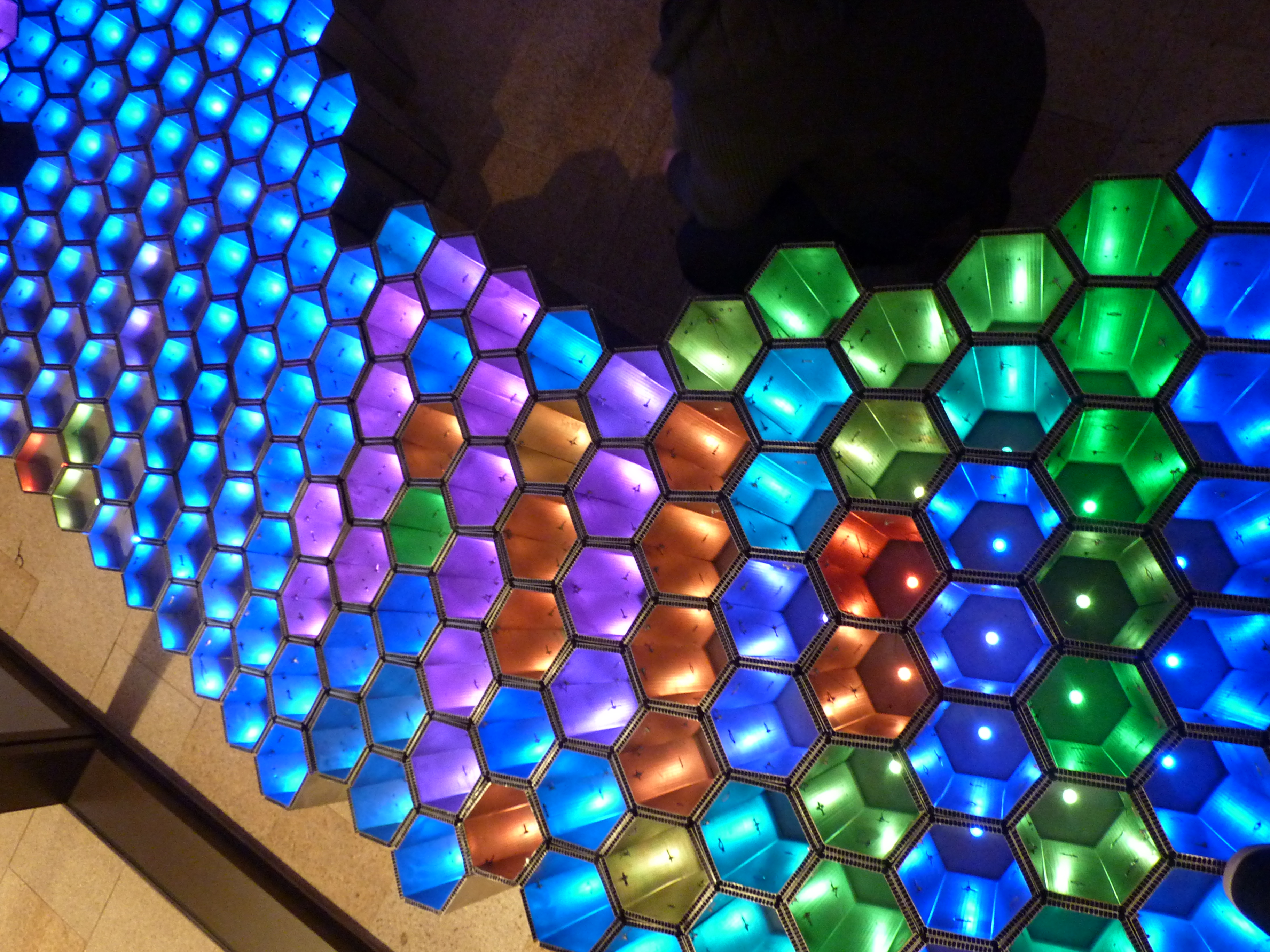
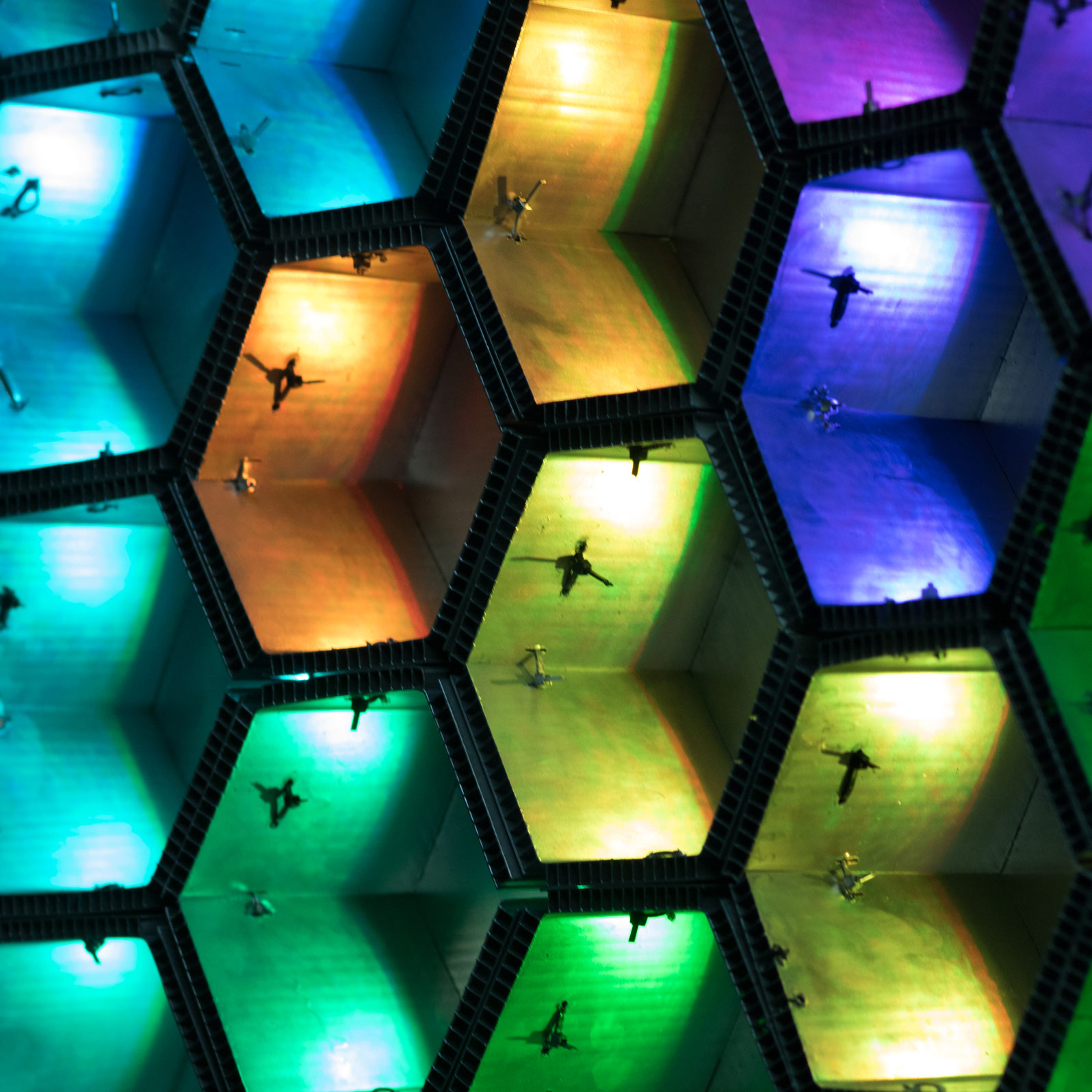
- HEXTIC (2014) — an interactive light installation for the Sydney Architecture Festival, where the design problem was translating a natural phenomenon into something built and responsive.
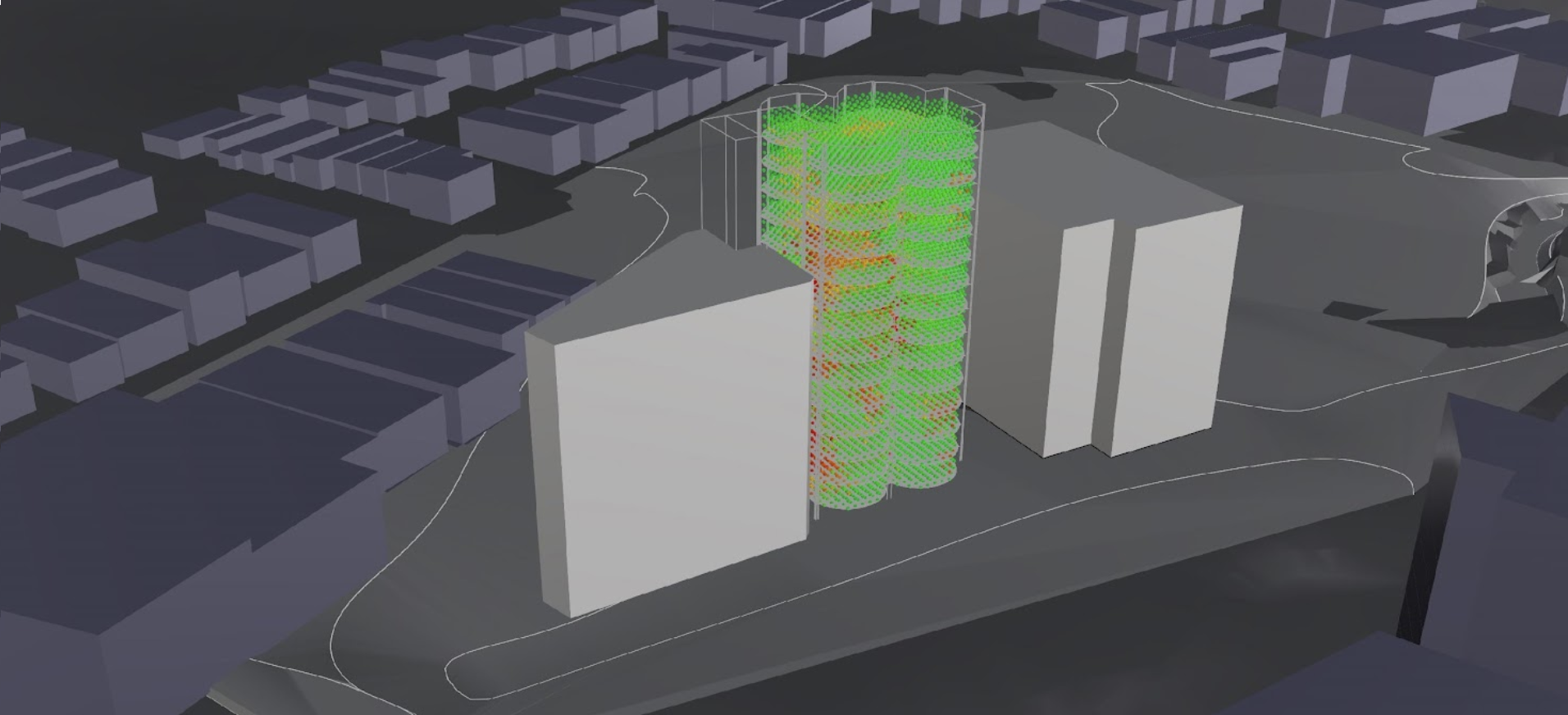
- Green Star Daylight (2016) — my graduation thesis, where the problem was measuring daylight through a building accurately enough to test it against a compliance standard.
Approach
HEXTIC
A wall of hexagonal prisms, each lit from within, with the lighting choreographed to echo the way water ripples spread and interfere. The geometry was generated and the light sequencing driven in Processing (Java), which talked to the manufacturer’s lighting control so the simulated ripples played out across the physical array.
Green Star Daylight Simulation
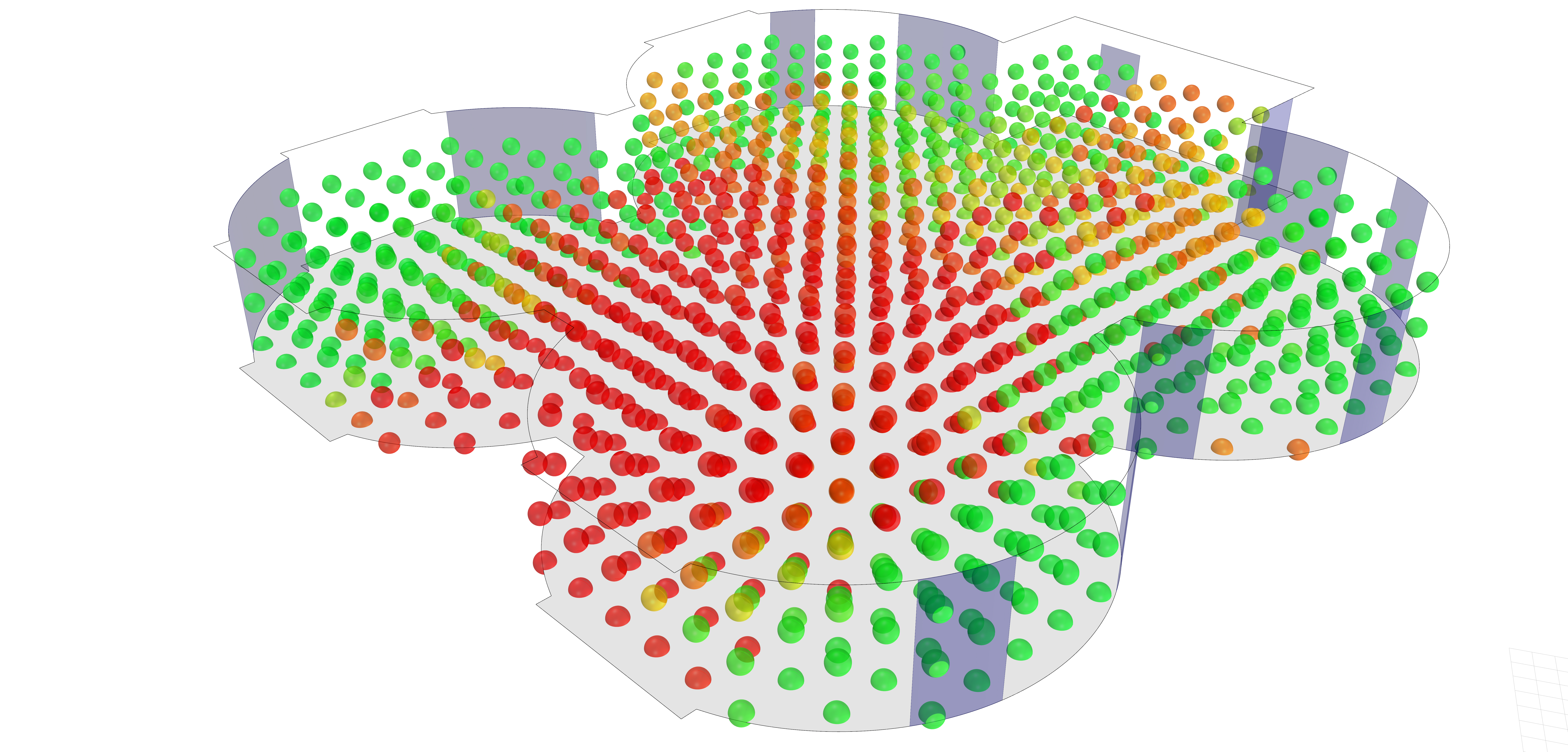
A tool that fills a building’s interior with a 3D grid of sample points (voxels) and computes the daylight reaching each one, then scores the result against the Green Star “Daylight” credit. Built visually in Rhino + Grasshopper, using the Honeybee and Ladybug plugins to drive the underlying daylight engine.
Decisions
HEXTIC
The interesting constraint was real time. A ripple isn’t a video to play back — it’s a simulation sampled every frame and mapped onto a fixed grid of lights, so the model had to run live and degrade gracefully when the hardware couldn’t keep up. Keeping the simulation and the lighting output decoupled is what let the piece stay responsive.
Green Star
The core trade-off was voxel resolution against runtime: too coarse and the score is meaningless, too fine and a single building takes hours. The work was in finding a sampling density that was defensible against the standard while still iterating in minutes, and in trusting Honeybee/Ladybug to wrap the daylight engine rather than scripting it from scratch.
Outcome
HEXTIC was installed at the Sydney Architecture Festival and shown at the Media Architecture Exhibition Sydney 2015, with coverage in Australian Design Review and UNSWCode. The daylight simulation became my thesis and was accepted to and presented at CAADRIA 2016 in Melbourne.
Looking back, both were really arguments for the same thing — that writing the tool is part of the design, not a step before it. That conviction is what carried into the software work that followed.
References
- HEXTIC — UNSWCode · Australian Design Review · Media Architecture Exhibition 2015
- Green Star Daylight — CAADRIA 2016 paper